Market Intelligence
When Art Becomes an Asset: What Collectors Know and Artists Must Learn
On the distance between making work and holding it as property
Qhakaza Research ·
Placeholder content. The article textshown here was written by the development team so this page is not empty during a demonstration. It is not Qhakaza’s wording and should not be relied on.
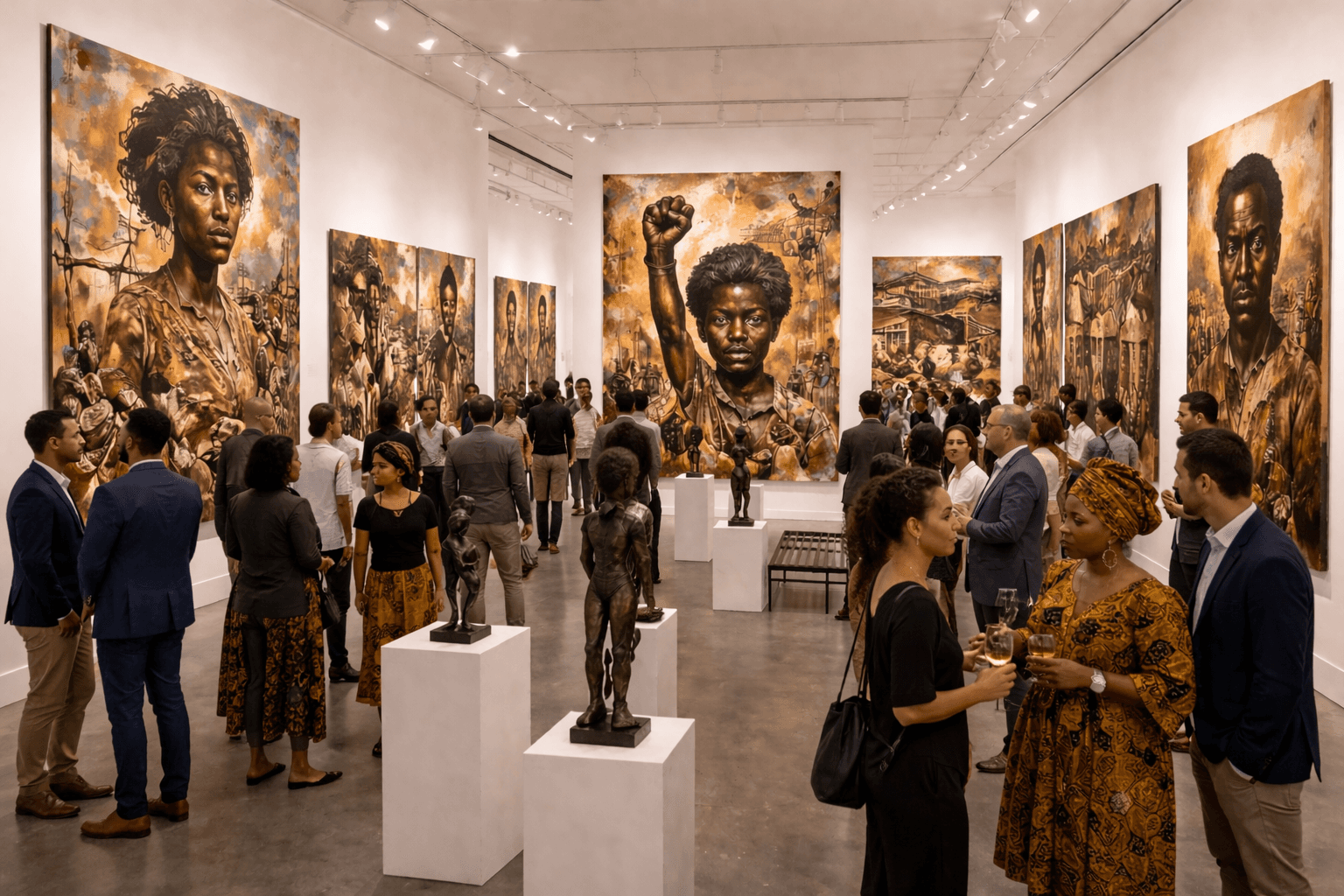
Art has always lived between two worlds. In one it is expression: memory, identity, ritual, rebellion. In the other it is property, with all the apparatus property brings - title, provenance, insurance, valuation, and the question of what happens to it next.
Most artists are trained thoroughly in the first world and not at all in the second. Most collectors arrive already fluent in the second and are learning the first. The gap between them is where a great deal of value is lost, and it is rarely lost dramatically. It is lost in an undocumented sale, a certificate never issued, a studio record kept in a notebook that no longer exists.
What follows from this is unglamorous and consequential. A work with a complete record is not merely easier to sell; it is easier to lend, to insure, to place in an institution, and to leave to someone. A work without one may be just as good and still be much harder to move.
For artists, the practical implication is that documentation is part of the practice rather than an administrative afterthought. For collectors, it is that the absence of a record is not proof of a problem, but it is a cost, and it should be priced as one.
DEMO TEXT. Written to fill this page for demonstration. Not Qhakaza research and not a market claim.
Sources
This demonstration article cites no sources because it makes no factual claims.